French House (French Touch) — Listen to Tracks Online | Minatrix.FM
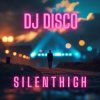
DJ Disco - Silent High
04:55 11.36Mb [320 kbps] 4358 0 0 126 BPM 15.04.2026 schmidt TOP 100 House, French House
Kito Jempere - Love Filter
04:45 10.96Mb [320 kbps] 97 0 0 01.06.2025 layden TOP 100 House, French House
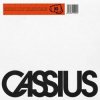
Cassius - Cause Oui! (feat. Mike D)
02:15 5.23Mb [320 kbps] 98 0 0 01.06.2025 layden TOP 100 House, French House
Cassius - Ibifornia (Myd Remix)
05:40 13.06Mb [320 kbps] 94 1 0 01.06.2025 layden TOP 100 House, French House
Cassius - Youth Speed Trouble Cigarettes
03:56 9.09Mb [320 kbps] 93 0 0 01.06.2025 layden TOP 100 House, French House
Cassius - Don't Let Me Be (feat. Owlle)
03:39 8.47Mb [320 kbps] 65 0 0 01.06.2025 layden TOP 100 House, French House
Cassius - Action (feat. Cat Power & Mike D)
08:56 20.53Mb [320 kbps] 83 0 0 01.06.2025 layden TOP 100 House, French House
Cassius - The Missing (feat. Ryan Tedder & Jaw)
04:14 9.77Mb [320 kbps] 82 0 0 01.06.2025 layden TOP 100 House, French House
Cassius - Go Up (feat. Cat Power, Pharrell Williams & Butch)
05:34 12.83Mb [320 kbps] 105 0 0 01.06.2025 layden TOP 100 House, French House
Popular music genres
All genres →French House: how French producers reimagined disco
French House, also known as French Touch, is a style of electronic dance music that emerged in France during the 1990s. Its characteristic sound grew out of American house, disco and funk, but French producers developed their own approach: instead of relying on complex arrangements, they often took a short fragment from an older recording and turned it into the foundation of a new track through filtering, repetition and rhythmic processing.
The result was a style in which retro melodies coexist with a dense electronic rhythm section, while familiar timbres are transformed into something entirely different. French House had a major influence on the dance scene of the late 1990s and early 2000s, and its production techniques can still be heard in contemporary house and disco-oriented electronic music.
From Paris studios to the international scene
The rise of French Touch is closely linked to French club culture in the mid-1990s. One of the important early releases was Pansoul (1996) by Motorbass, the project created by Etienne de Crecy and Philippe Zdar. The musicians experimented with samples, deep basslines and repetitive rhythmic patterns while developing ideas drawn from American house.
Global interest in the French electronic scene increased after the release of Homework (1997) by Daft Punk. Tracks such as Da Funk and Around the World demonstrated how expressive music built from a relatively small number of elements could be. Their later album Discovery (2001) revealed another side of the duo, with a more melodic sound connected to disco, pop and electronic funk.
In 1998, Stardust — the project formed by Thomas Bangalter, Alan Braxe and Benjamin Diamond — released Music Sounds Better With You. The single became one of the most recognizable examples of filtered house and proved that a repeating musical fragment could form the basis of a major dance hit.
Why does French House sound the way it does?
The defining feature of the style is not a specific set of instruments, but rather the way producers work with sound. Short fragments of disco and funk recordings are often used as source material and reshaped through studio processing.
Filtering makes it possible to gradually open up or cut high frequencies. This allows a familiar musical loop to evolve throughout a track even without introducing new melodies. This is where the term filter house comes from, a label often applied to some of the most characteristic recordings from the French scene.
Sampling connects modern dance rhythms with the musical legacy of the 1970s and 1980s. A bass phrase, guitar chord, vocal fragment or even a few seconds of an old disco recording can become the foundation of a new track.
Rhythmic processing brings these elements together into a coherent sound. French House typically features a steady four-on-the-floor kick drum, a prominent bassline and repeating parts that gradually evolve through filtering, compression and other effects.
At the same time, French House is not limited to a single formula. Some tracks sound smooth and melodic, while others lean toward rougher electronic textures, denser arrangements and stronger club energy.
Cassius and the evolution of French House
The duo Cassius played an important role in the history of French Touch. The project was founded by Philippe Zdar and Hubert Blanc-Francard, better known as Boom Bass. Their music combined house, funk, hip-hop and an electronic pop aesthetic.
The album 1999 established Cassius as one of the leading projects on the French electronic scene. In the following years, the duo continued to experiment with vocals, live instruments and different forms of dance music rather than limiting themselves to classic filtered house.
The Minatrix.FM catalogue features different sides of Cassius’ work. For example, Go Up, featuring Cat Power and Pharrell Williams, demonstrates a more song-oriented approach to electronic music, while Myd’s remix of Ibifornia shows how another producer reinterpreted material by the French duo.
French Touch and contemporary electronic music
During the 2000s, the French electronic scene became increasingly diverse. Justice developed a heavier, more distorted sound at the intersection of electronic music, rock and disco, while Alan Braxe, Fred Falke and Breakbot drew inspiration from melodic funk and the dance music of previous decades.
Today, the term French Touch is used more broadly than it was originally: it can refer not only to a particular type of house music, but also to an entire generation of French electronic artists. French House, in the narrower sense, is still primarily associated with disco samples, filtered musical loops and a distinctive dance groove.
On Minatrix.FM, you can listen to tracks from this style, explore music by Cassius and other artists, and discover remixes and releases that combine French House with related genres. To explore the electronic scene further, visit the House, Disco and Funk sections.